

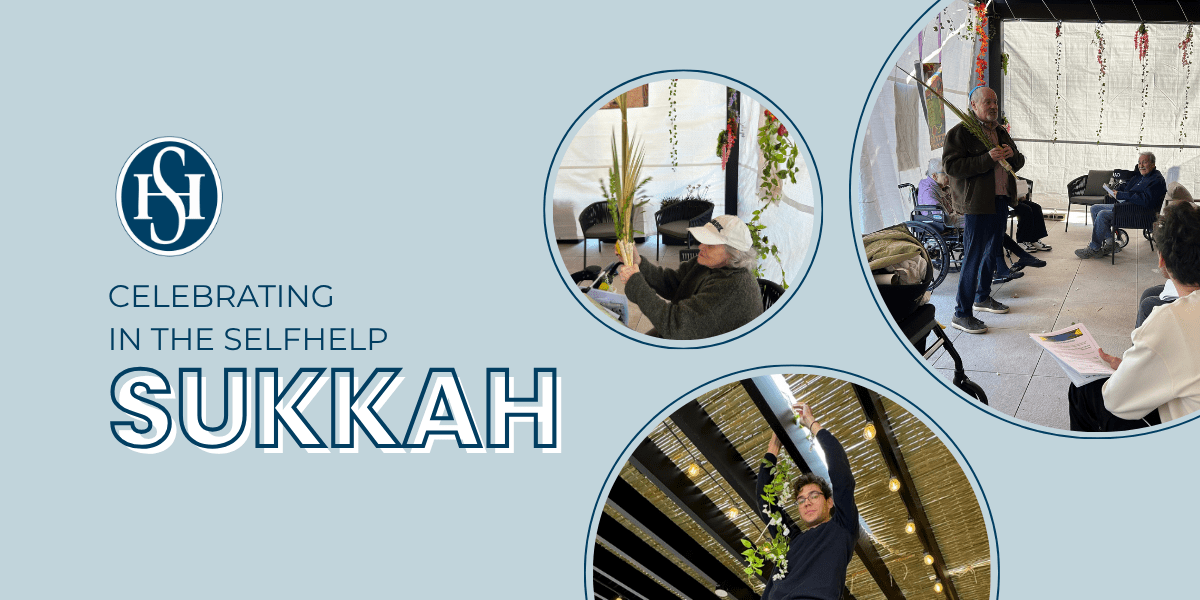
Celebrating in the Selfhelp Sukkah
Each fall, the rooftop terrace at The Selfhelp Home transforms into something truly special: a warm and welcoming Sukkah.
Residents, families, friends and staff gather in the transformed Ruth Mayer Raab pergola to celebrate the holiday of Sukkot. With colorful decorations crafted by residents and volunteers, a hint of autumn in the air, and the joy of community filling the space, the Selfhelp Sukkah becomes a place of connection, tradition, and meaning.
This year’s celebrations brought together all the richness of Jewish life at Selfhelp.
Jonathan Schwartz, Director of Jewish Life, led residents in services and discussions, guiding reflections on the themes of Sukkot. Residents enjoyed the chance to share stories and memories of celebrating the holiday throughout their lives, weaving personal history into the fabric of community tradition.
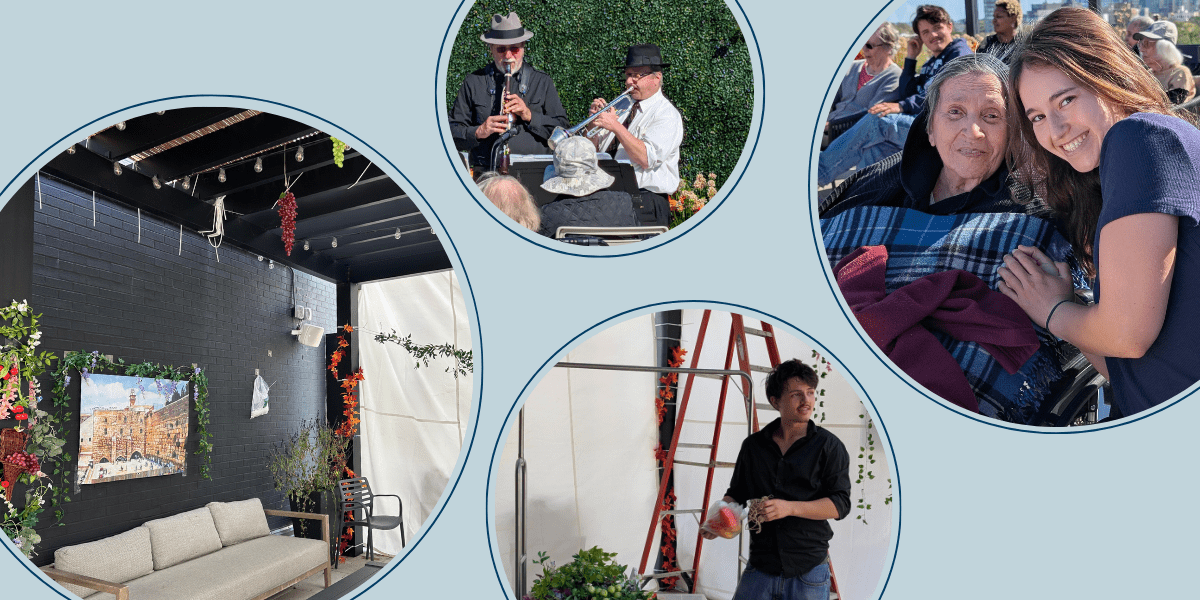
Meals outdoors beneath the sechach were highlights of our week! Residents and guests came together to share delicious food, laughter, and conversation. For many, eating under the Sukkah rekindled memories of holidays past, from familiar songs to family recipes.
Decorating the Sukkah was an act of celebration in its own right! Selfhelp’s staff and volunteers filled the space with handmade art, paper chains, fruits, and seasonal touches.
At Selfhelp, Jewish celebrations aren’t just dates on a calendar. They’re opportunities to nurture the soul.
The Sukkah becomes a bridge between past and present, allowing residents to engage fully in Jewish life while also inspiring the younger generation of volunteers and family members who join them.
It’s moments like these that capture the heart of The Selfhelp Home: a place where tradition lives on, not only in prayer and ritual, but in the connections that flourish around the table.
What Is a Sukkah?
For those who may be less familiar with the holiday, a Sukkah is a temporary dwelling built for the festival of Sukkot, which takes place after Yom Kippur. The structure, usually made of wood or canvas walls and topped with branches or natural materials, is a symbolic reminder of the fragile shelters used by our nation during their forty years of wandering in the desert.
The Lulav and Etrog
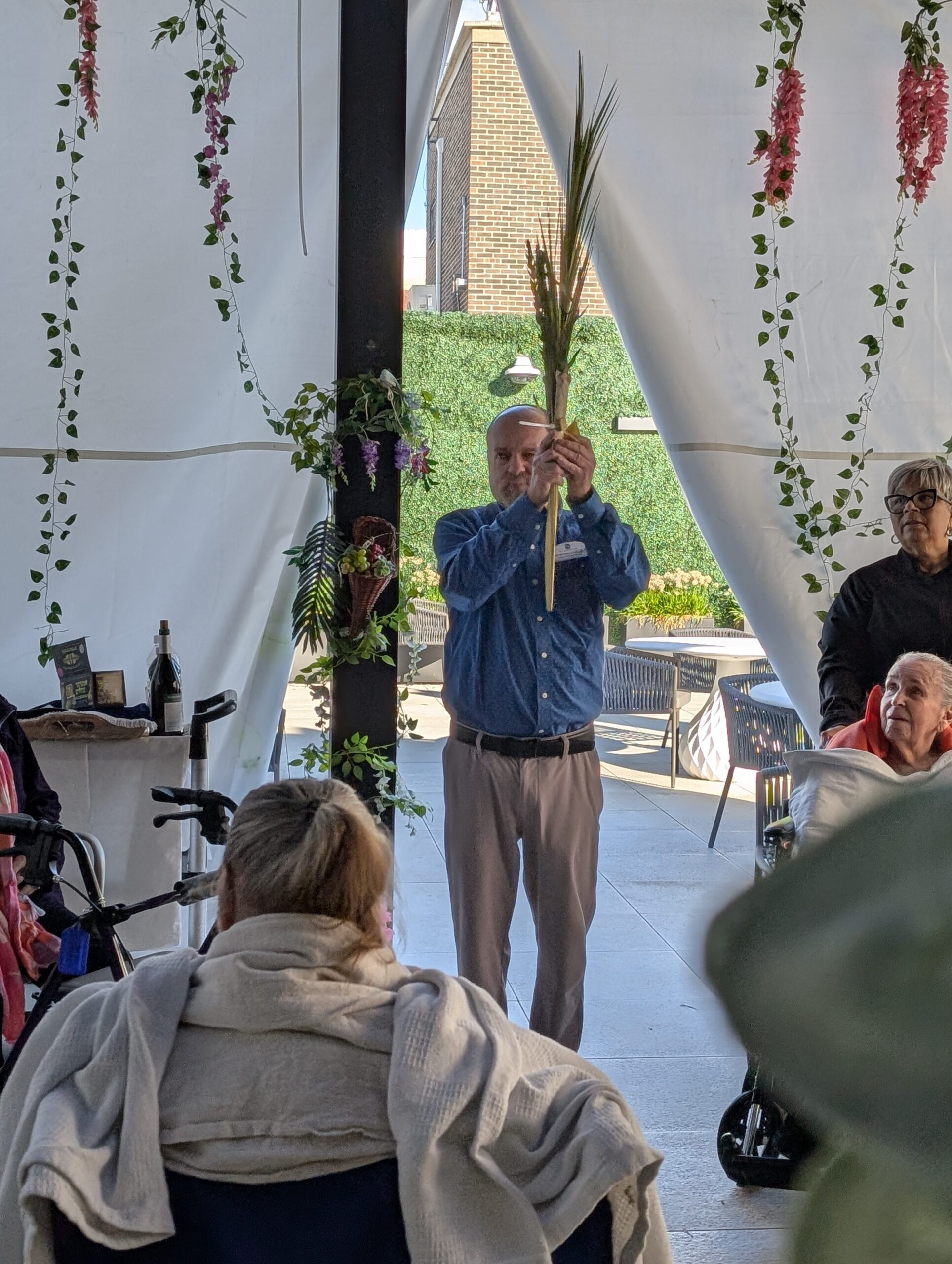 Another beloved tradition of Sukkot is the ritual of the Lulav and Etrog. The Lulav is made up of three plants—a palm branch, myrtle, and willow—bound together and held alongside the Etrog, a fragrant yellow citron fruit.
Together, they are waved in all directions to symbolize God’s presence everywhere and to connect us with the natural world.
At The Selfhelp Home, residents had the opportunity to hold and shake the Lulav and Etrog, continuing a practice that connects generations of Jewish families around the world. For many, it was a meaningful way to participate actively in the holiday, and for some, it was the first time they’d had the chance to observe this mitzvah in many years.
A Tradition Sustained by Support
The sukkah, the decorations, the programming. None of it is possible without the generosity of donors and supporters like you. People who champion Selfhelp’s cultural and spiritual programming.
As we reflect on the joy of gathering in the Sukkah, we invite you to join us in keeping these traditions alive. Your support ensures that residents at The Selfhelp Home can continue to celebrate, connect, and thrive in meaningful ways.